
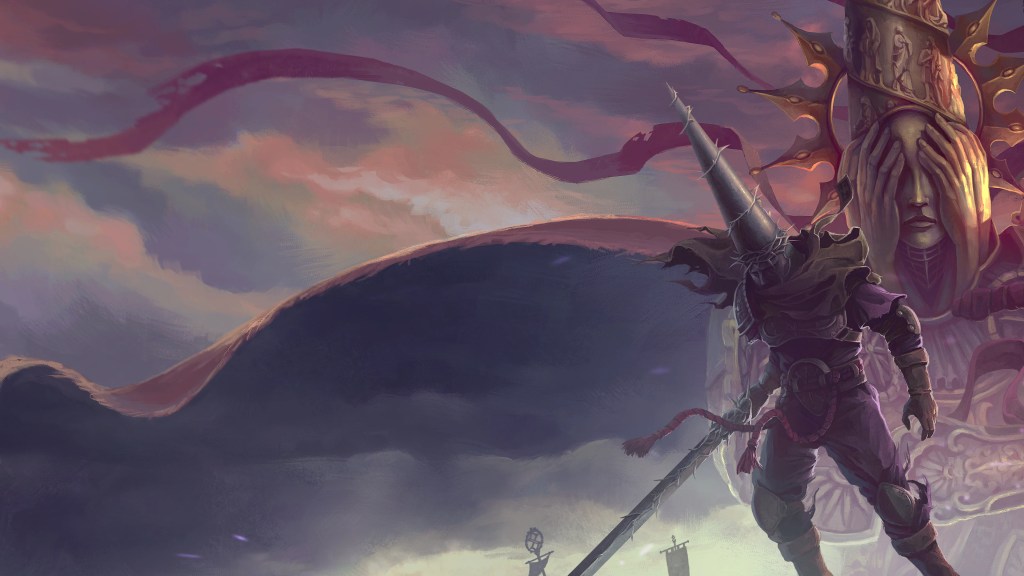
When I first started playing Blasphemous (the 2019 debut game from Spanish developer The Game Kitchen), I was immediately stunned by the visuals but not for the level of “realism” that other games are praised for. The graphics themselves are beautifully detailed in a pixelized art style, but that was not the reason this game captivated me. It was the sheer visceral nature of the game that grabbed my attention. This game is full of bodies, some twisted and in pain, others angelic and otherworldly. Each one was shaped by close encounters with the supernatural or granted preternatural powers. The game does not hide these religious sights from the player, but puts them on full display. These divine miracles permeate the entire game, shaping the world and its residents in a way that evokes medieval and early modern religion.
Released in 2019, Blasphemous was developed by The Game Kitchen and published by Team17. It portrays a fantasy world, modeled on late-medieval and early modern Iberian Catholicism, which “The Miracle” had twisted and marred. The player takes on the role of the “Penitent One” who must undergo a series of humiliations to redeem themselves and the world of Cvstodia. With the free Wounds of Eventide expansion in 2021 and the release of Blasphemous 2 in 2023, the lore and story of the world of Blasphemous has only grown. While the narrative is fascinating in its own way, it is how the game approaches the supernatural which sets it apart.
Blasphemous is Catholic not only in visual inspiration but how the supernatural is portrayed in-game. Throughout the game, the player finds the many ways that the Miracle has been made manifest. In each case, religious elements are drawn from historical accounts in a way that demonstrates how miracles occurred visibly on the bodies of the faithful and depicts the diversity within lived religion. Blasphemous overwhelmingly focuses on material and corporeal elements drawn from Catholicism that make it a compelling (though heavily exaggerated) representation of devotional life.

Miracles and Credulity
The world of Blasphemous evokes a period in history when religion was not as distinctly separated from the other parts of life. Life in early modern Spain was permeated with religious meanings, language, symbols, and miracles. Carlos Eire’s approach to this period and its miracles, which he describes in They Flew: A History of the Impossible (2023), illuminates how Blasphemous operates as a depiction of early modern religion through its miracles. In this book, Eire describes how there was a proliferation of miraculous accounts in the late medieval and early modern period. In highlighting cases of levitation and bilocation, Eire takes belief in miracles seriously to understand what was considered possible. While people have always been credulous, this has taken on different forms throughout time. In the early modern periods miracles were considered a “social fact” that was unconsciously left unquestioned. Eire confronts underlying the assumptions about disbelief in the existence of miracles, and charges the reader to not discount the power of belief.
The power of belief is also foundational to how video games operate in engaging the player. Even Eire discusses how fiction is built upon the reader suspending their modern forms of disbelief to temporarily believe the possibility of a fictional world. Video games too operate on a suspension of disbelief, where the player suspends credulity to believe in the world of the game. This process allows for deeper engagement where the player would “buy into” its own social facts. It is in this way that Blasphemous, by virtue of the medium, already allows the player to enter into its world without modern forms of skepticism and reintroduce them to religious miracles. Video games like Blasphemous can explore this historical moment of believable miracles by immersing the player into a world where the natural and supernatural meet without the interference of modern credulity.
On this neutral ground between modern skepticism and early modern belief, Blasphemous animates this period in religious history through its miracles. Prayers, miracles, and supernatural visitations are ever-present mechanics through which the player can use to overcome the challenges posed by Cvstodia’s more monstrous inhabitants. The everpresent nature of miracles in-game and the physical effects of the player’s prayers and devotional items on the world make the miraculous impossible to deny. The Miracle is just part of the world, just as it was with early modern Catholics.
Miracles and the Body in Blasphemous
Blasphemous portrays the physical effects of The Miracle most visibly in the body. Every enemy or boss was once a regular person before they were blessed or cursed by the Miracle. This transformation can be monstrous, as shown in bosses like Ten Piedad, or a blessing of preternatural power like with Esdras. In each case, these bodies share in a form of religious experience that confirms the physical efficacy of miracles. The body, visibly maligned or altered by supernatural forces, is central in Blasphemous and Catholic religious life.
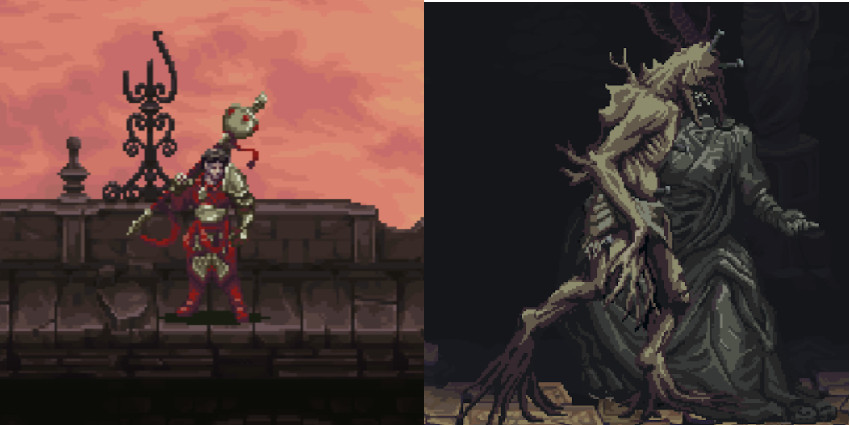
Historically, miracles are commonly associated with the physical body and overcoming its limitations, as the physical world meets the supernatural. In They Flew, the focus is likewise on bodily miracles of levitation and bilocation, where the body engages in preternatural activity beyond its normal abilities. The highly visible nature of these miracles on the body aided in their credibility through the action of observation. In Catholic miracles, like the stigmata (a manifestation of Christ’s wounds) and incorruptible corpses, these supernatural gifts demonstrated the subject’s faith externally for all to observe. These visible changes in the body which reflects the subject’s religion is exactly what occurs in Blasphemous.
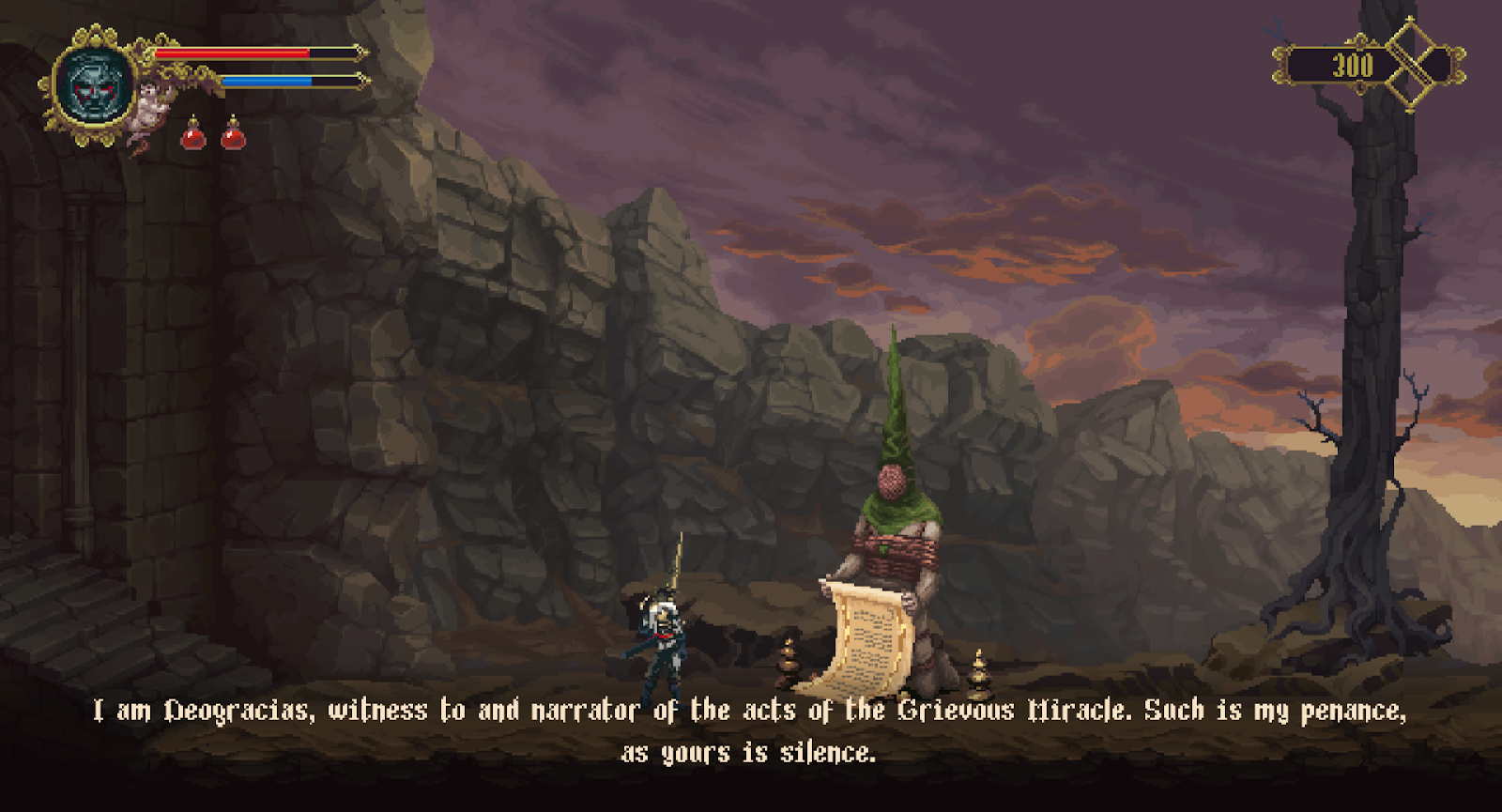
While exploring the world, the player will come across many characters who have been touched by The Miracle and take this close encounter as a moment for devotion. Characters like Deogracias have witnessed the Miracle and taken to narrating the actions of the player as a form of penance and devotion. The miracles that Deogracias observes through the game is the progress of the player as they overcome the various challenges of Blasphemous. Cleofas is another character encountered much later in the game. He prayerfully watches the suffering of Socorro, who experiences the suffering of others. Both are forms of devotion born from interactions with the supernatural power demonstrated in the bodies of others.
Embodied suffering and blessings (which are not clearly distinguishable) are central to the religious practice in the game, where the body is a direct site of miraculous and divine activity. Bodily suffering especially is intimately connected in-game to divine manifestation. As seen in the introductory cutscene, requests for punishment for guilt manifested in a miracle resulting in suffering and consist of a wider practice of revered penance. This reverence for suffering is not an invention of the game either, but exists in real-world religious communities, and in Catholicism in veneration of the Passion of Christ and the “victim spirituality,” where an individual is believed to be suffering for the community. Even the design of some enemies represents the medieval Catholic Flagellants, who whipped themselves in public processions as a form of penance. Both these forms of historical suffering are represented in Blasphemous in the many bodies in the game.
These bloody and horrific miracles can be explored painlessly and highly visibly in a digital environment. Miracles, demonstrated and exaggerated in Blasphemous, are not just visual cues but represent the complex devotional life of early modern Europe. The player not only encounters but utilizes these miracles for their own advancement, where the player themself can confirm the reality of these bodily miracles through observation. Blasphemous depicts both the pain and devotion of religious communities while allowing the player to engage in miracles themselves.
Miracles, Religion, and Video Games
While playing Blasphemous, I felt compelled to compare it to other games and their representations of similar religious periods. The concrete nature of religion in Blasphemous, and the gamification of religious devotion, are normally off-putting to me as they reduce complex forms of lived religion to mere numbers. Civilization 6’s faith and Crusader King’s piety mechanics felt as though they had diminished the organic nature of religion by setting strict numbers and values to practices. Additionally, religion was sectioned off from other parts of gameplay, which imposed social distinctions that would not have been historically present. In a way, Blasphemous follows suit in transforming religion into simple mechanics, where “Fervour” is spent for powerful abilities, but the ever present nature of religion in-game allows it to permeate all components beyond simple numbers. Even describing “religion” in Blasphemous is projecting a modern secularized understanding onto both the game and the early modern period, when religion as we know it did not exist. Blasphemous, through the persistence of miraculous events into all aspects, captures something of historical religion that is lost in other depictions.

Through representation of Catholic history, embodied suffering, and miraculous possibilities, Blasphemous explores religious experience in a very distinct way that rejects a focus on interior religious life for an externalized form of religion. Many modern religious representations tend to be rooted in a Protestant model of private interior belief, and detached religious practice, which often ends in disaster when trying to portray other religious systems. Blasphemous, on the other hand, makes religious experience immediately external in its roots in early modern Catholic history. The game shows religious experience through actions and interaction with the external world, and manifestations of the supernatural and miraculous within the same environment as mundane aspects of life. In the early modern period, larger processes of empiricism, secularism, and credulity reduced the occurrence of miracles in our world, but in Blasphemous elements of early and premodern Catholic religious history can live on. Blasphemous captures the pain of religious life and the visual miracles played out on the bodies of the faithful described by Carlos Eire. Blasphemous may be bloody and exaggerated but the game’s deeper depictions of devotional life set it apart from other historical games.
Bibliography:
Eire, Carlos, They Flew: A History of the Impossible, New Haven: Yale University Press, 2023.
Kane, Paula M., “‘She Offered Herself up’: The Victim Soul and Victim Spirituality in Catholicism,” Church History 71, no. 1 (March 2002), 80-119.
The Game Kitchen. Blasphemous. Team17. PC. 2019.

Ludohistory is made possible only through viewer support. If you enjoyed this post and want to support the channel, please do consider joining on Patreon.
 Ludohistory
Leave a comment