
We have been blessed with yet another great year for historical video games. Both indie and AAA developers have released spectacular games set in the past, proving yet again that audiences are eager to explore the past through play.
5. The Forever Labyrinth
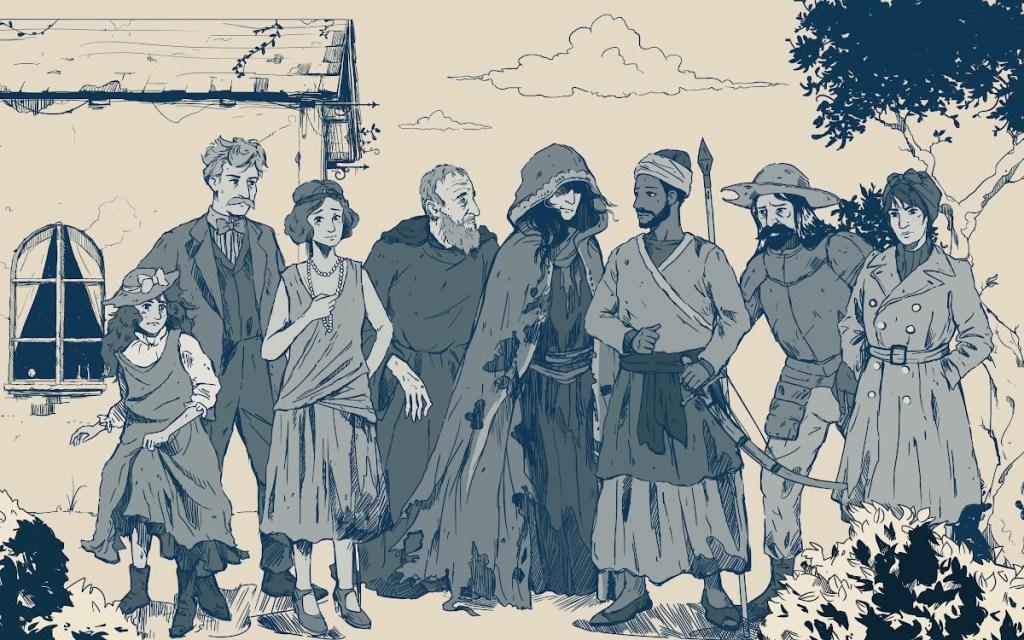
Inkle has always been fantastic at creating interesting historical games. From Arthurian myth to space archaeology, everything they touch seems to turn to gold. Their most recent game, a collaboration with Google Arts & Culture, hits another home run in combining history and arts education.
In The Forever Labyrinth, you use similarities between artworks in Google Arts & Culture’s database (about 8000 pieces by artists from around the world) to navigate and solve puzzles. At any time, you can look at those paintings and learn more about them through the Google A&C pages. Along the way, you meet and save people from across time who have been trapped in the labyrinth, learning their stories along the way.
The game’s art criticism is rather basic, often focusing on color or figures (like “dogs” or “trees”) as a tool of navigation. I wish it did more with composition, theme, or movement, building more interesting connections across the artworks included in the game.
4. Ara: History Untold

Ara: History Untold, like Civilization, is a game that promises to explore all of human history. Unlike Civilization, it claims to really focus on the “lost” corners of history. This is most apparent in the leader selection – in a word, it’s phenomenal. I love the focus on women, the separation of political leadership from in-game leadership, the ethnic diversity. It all deserves praise (even if there is a lot of influence from “Rejected Princesses”).
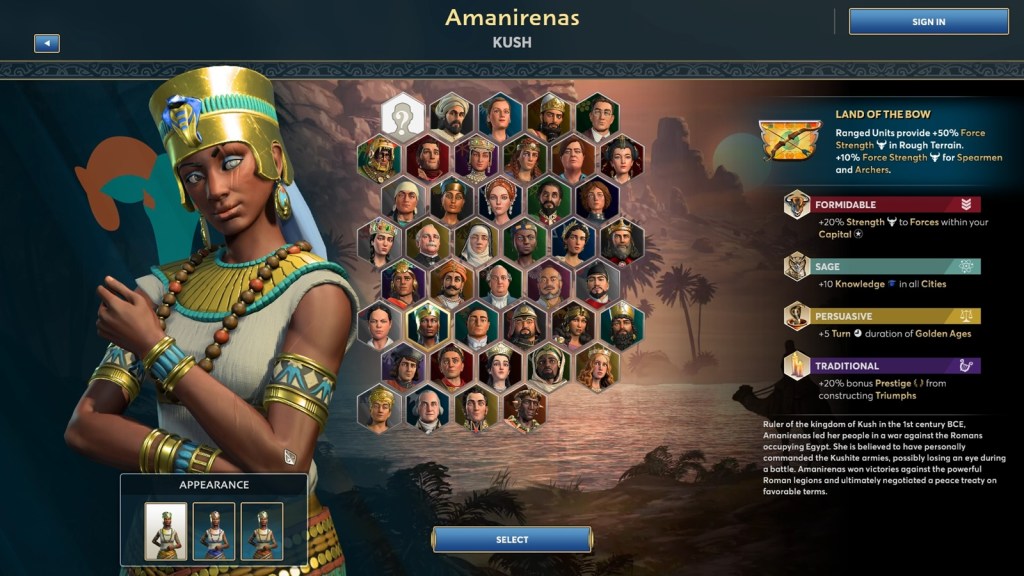
The game, unfortunately, makes a couple of insane decisions when it comes to age progression that hold it back. For instance, Algebra can be researched in the Bronze Age (i.e. prior to the 6th century CE), and is necessary to build the Acropolis wonder. Historically, Algebra is established as a field by Muhammed ibn Musa al-Khwarizmi in the early 9th century. The Parthenon is therefore some 1300 years older than algebra!
That’s a level of inaccuracy that doesn’t seem to matter, but when trying to capture the essence of each time period, getting these details wrong is unfortunately a fairly large black mark.
3. Manor Lords

Manor Lords is a remarkable game. I’ve never had more fun starving to death because I didn’t harvest enough barley.
In historical games set in the Middle Ages, the hardships of simply living are often elided. Even when farming is present at all, like in Age of Empires, it’s simple and largely automated in favor of more “exciting” combat. Manor Lords leans into that friction, simulating the seasonal highs and lows of the large peasant population with a really remarkable degree of fidelity.
Manor Lords is still in early access, and so in 2024 is still missing a lot of features that up the historical ante (a recent patch finally added rivers). So, I’ll be curious to see how the game develops, and whether it will continue to walk the line of making subsistence farming fun.
2. Indiana Jones and the Great Circle

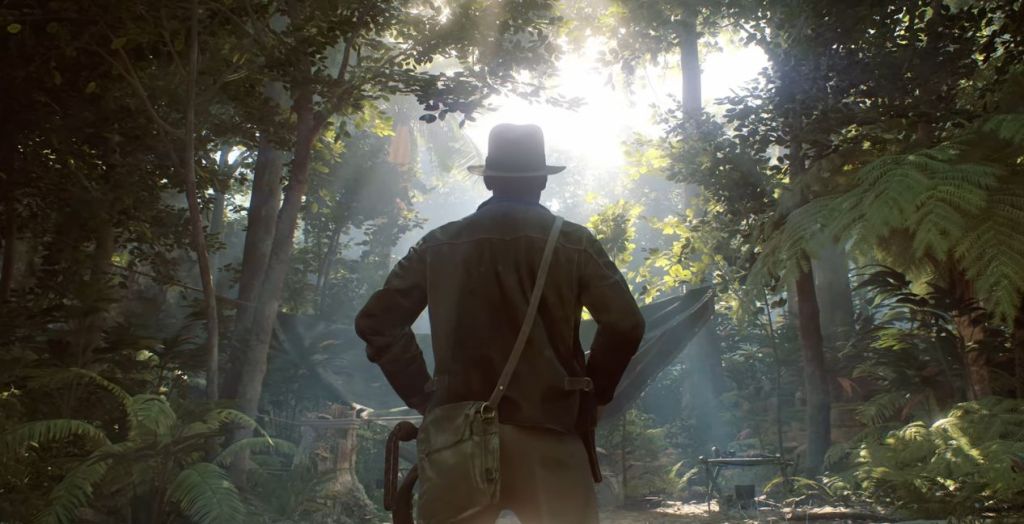
There are two truths every archaeologist acknowledges about Indiana Jones: He’s a terrible archaeologist and we love him anyway. His commitment to beating up Nazis, if nothing else, is admirable and welcome. What’s not so consistent, however, is his commitment to historical reality. As often as the films tell something interesting about history or archaeology, they do something weird like ancient aliens or blatant racism.
That makes Indiana Jones and the Great Circle’s success even more surprising. Let’s get the elephant out of the way; the concept is absurd. The sites mentioned in the game – Rapa Nui, Machu Picchu, the Vatican, Giza, Ur, Sukhothai – don’t even come close to making a circle, much less one that bisects the earth. Adamic isn’t a thing, and religious sites (especially non-European religious sites) were not created to disguise ancient sites created by the Biblical Nephilim.
However, once you set the main plot aside, the game becomes a fantastic history piece in the 1930s. Nowhere is this clearer than at Marshall College. The plots kicks off in a museum, and the level of detail is absurd. It would be easy to make the labels “good enough” – either blurred out, or generic, or modern. Instead, the devs took the research time to write labels that correctly reflect academic knowledge in the 1930s!
This care persists through the whole game. Every level has museum replicas, little phrases, weapons, and sites that look correct for 1937. They didn’t have to do that, but I think it shows that the team at MachineGames realized that Indy can care about history and culture, and is at its best when it does.
Bonus – Crusader Kings III: Roads to Power

Crusader Kings is one of the most iconic historical game franchises of all time. Over the past 4 years, CKIII has developed more and more depth, creating the most comprehensive map of the medieval world ever. Over the years expansions like Fate of Iberia have reworked regional mechanics to better reflect the uniqueness and variation within “medieval” society. The newest expansion, Roads to Power, adds a new administrative framework for the Byzantine Empire (finally), and adds landless adventurers. Landless play is fascinating to me; in a franchise whose goals are often around acquiring as much land as possible, rejecting that paradigm entirely really makes the game more interesting.
I, unfortunately, don’t play Crusader Kings, and so can’t speak to whether it was executed well or not! Therefore, it gets an honorable mention, but I cannot truly evaluate it.
1. The Thaumaturge
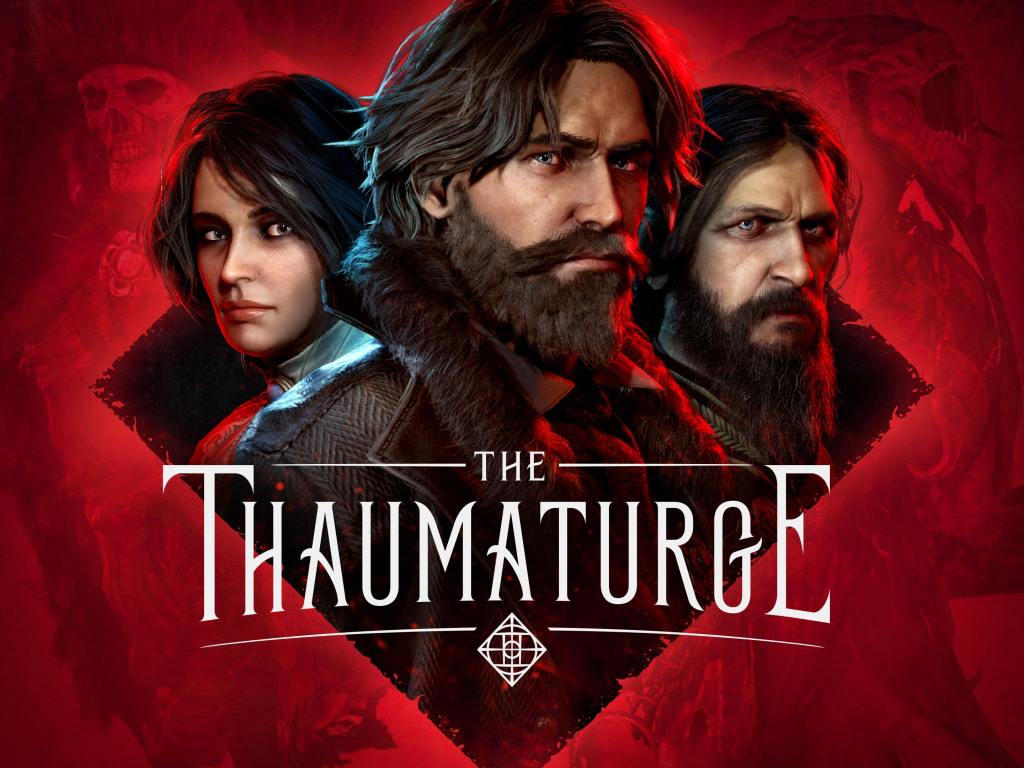
Central Europe has been on fire recently with historical games. Czech and Polish developers are, for my money, doing the most innovative, meaningful historical games in the world, often representing their own history. The Thaumaturge is a fantastic example of this, and captures a supernatural worldview better than almost any game I’ve heard of.
In 20th century Poland, a vast majority of the population believed in the occult, and The Thaumaturge dares to ask “what if that belief was right” without sacrificing the historical fidelity (unlike many ‘historical games’ with supernatural elements). There’s some amount of silliness; Rasputin never visited Warsaw! However, the successes of leaning into occult societies, Jewish mysticism, folklore, and demonology are fantastic.
Warsaw also feels so “alive” beyond the scope of the game. The streets are built from archival photographs of Warsaw around 1905, and the “Urban Secrets” mechanic fills the town out with so much activity. Comedy shows, circuses, sports, fireworks, exotic botanical exhibits, and more are happening during the labor strikes and violence of the First Russian Revolution; even during this politically significant time, culture continues.
I can’t think of a game this year that understands that truth better than The Thaumaturge, and is for that reason my best historical game of 2024.
2025 promises to be an even more spectacular year for historical games. In order to see my opinions live, make sure you come join over on Twitch!

Ludohistory is made possible only through your support. If you enjoyed this post and want to support the channel, please do consider joining on Patreon.
 Ludohistory
Leave a comment