
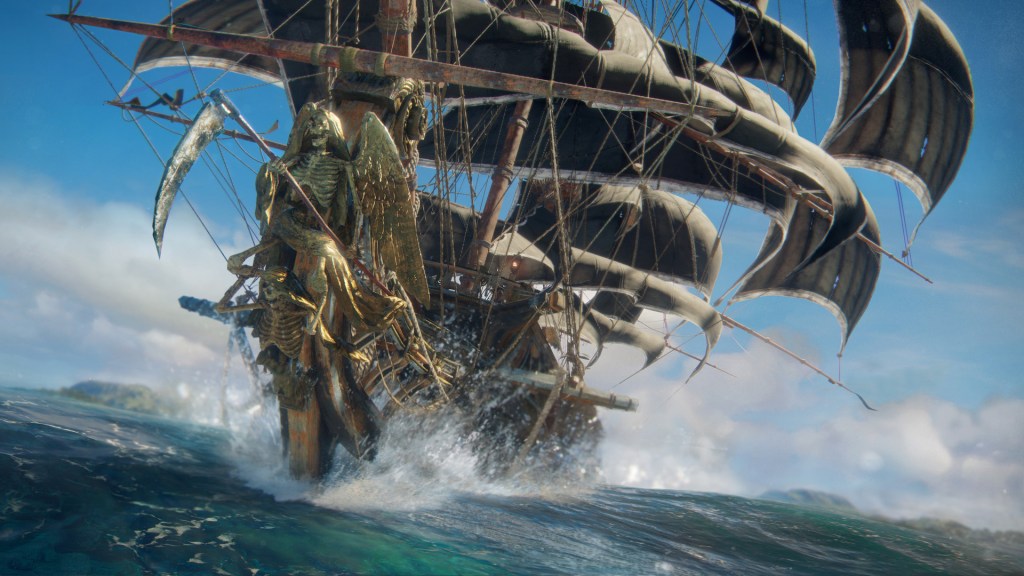
The development of Skull and Bones is basically a historical epic unto itself. The development has been legendarily troubled, and even now, a mere few weeks before the Pirate-Simulator-MMO is meant to launch, there are still signs of major reworks.
As far the gameplay goes – it’s Assassin’s Creed IV Black Flag but with more finicky boarding. And other players attempting to “help” (read: drawing French East India Company/ “Compagnie” fire onto you while you are trying to manage an over-stuffed hold). It’s… fine. Not as silly as Sea of Thieves, not as strong of a power-fantasy as ACIV, it’s just fine.
But that’s not why we’re here – this is a history site, and Skull and Bones promises to be the only AAA game that simulates the early modern pirate trade in the Indian Ocean! It’s a fascinating time period, with multiple groups of Arab, European, Southeast Asian, Japanese, Chinese, and Indian corsairs emerging in response to the burgeoning attempts of European corporations to exert control over the high seas. It’s got so much promise, and I wanted it to do well.
I got access to the second closed beta in December 2023, and I gotta say – there are some promising decisions visible! Madagascar and the Swahili coast look gorgeous, the world event (a convoy of “Indiamen” – heavily armed merchant-vessels) makes perfect sense in the setting, and the character creator really emphasizes historical diversity. But, there’s a few “buts” that seriously dampened my enjoyment of my time with the game, and I was left feeling like Skull and Bones is shaping up to be the worst sin of historical media – unmemorable.
The Indian Ocean Trade
According to in-game documents, Skull and Bones is set somewhere around 1695, with the closed beta set around the Ile de Sainte-Marie, Madagascar, and the Swahili Coast (The game eventually promises to cover the rest of the ocean including the Arabian Peninsula, the Malabar Coast, the Bay of Bengal, Ayutthaya, and the various Indonesian polities.) While pirates of course hounded pilgrims and traders for centuries, the 17th century is a high point of pirate action, thanks mostly to Europeans.
In the 1600s, various European corporations vied for supremacy over the Indian ocean trade routes, requiring Indian merchants to purchase letters of legitimacy or have their goods seized by massive ships known as “Indiamen.” One merchant might have to buy an English, Dutch, French, and Portuguese letter, an obviously unsustainable requirement. This drove a lot of people to the brink, and piracy expands as form of resistance, especially in southwestern India, on the Malabar coast, and in Oman, among the Ya’rubi corsairs.
At the same time, opportunities for privateering were drying up in the Caribbean, and so enterprising captains like William Kidd, Henry Avery, and Thomas Tew saw opportunities to make bank off of the giant war-ships of the East India Companies. They mostly set up shop in northern Madagascar, though their ships terrorized everyone from pilgrims in the Red Sea to the Mughal treasure fleet in northwestern India.
In order to do so, they had to get support and protection from the Malagasy peoples of Madagascar and the Comoros – those islands were inhabited! As with Caribbean piracy, that worked because pirates didn’t bury treasure very often – they instead traded (some of) it locally for food, water, crew, and wood! They also exported a lot of the more luxury goods in smuggling trade to colonies in the Americas, it wasn’t altruistic, but it was enough that they could become influential members of the community (a Malagasy king, Ratsimilaho, claimed to be Thomas Tew’s son).
Skull and Bones’ beta mostly engaged with this last group, for better and for worse.
Diversity and Material Culture
One thing I was particularly impressed by while playing Skull and Bones was how well the things we were stealing fit the setting! Tobacco, processed goods, and even some gemstones were being imported, while spices, rare woods, and unprocessed goods were being shipped from the Indian Ocean to the Atlantic. Supplementing this, there were some genuinely lovely references to Malagasy material culture such as the delightful zebu (humped cattle) statuettes seen in several places.
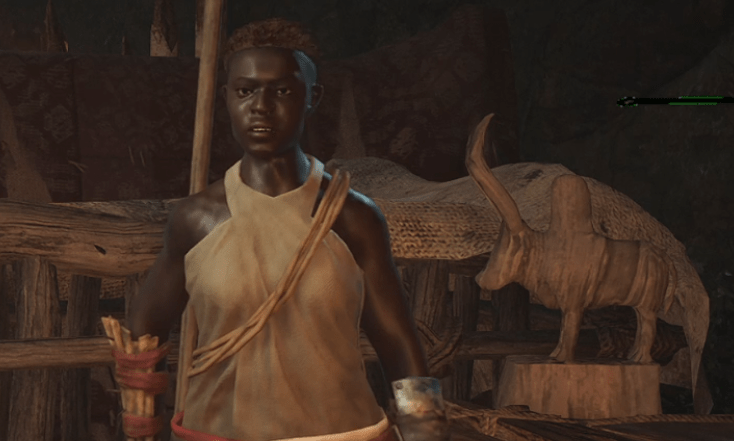
There also is a rich diversity of ship types. Apart from our starting vessel (incorrectly called a “dhow”), there were a mix of square-sailed frigates, lateen-rigged dhows, and Chinese junks all sailing around the area. While it’s historically pretty unlikely that they’d all be in any given port at the same time, there were a lot of different ships interacting with each other and bringing them together makes all the different cultures visible! That’s good – I’ve been an advocate for years now that media should do the historically implausible (not impossible, implausible) to make historical cultural diversity more visible within the world.
This care also clearly extended to the character creator. There was a lot of care to show Black, Brown, and SE Asian skin tones, tattoo styles, and hairdos in the character creator, and I deeply appreciate it. This is a setting that brought together people from all over the world, and seeing that diversity on the crews, in NPCs, and in the other players running around the server felt really good.
Mob Rule
Unfortunately, Skull and Bones’ commitment to diversity appears to be pretty superficial. Throughout the game, everyone in every town, ship, cutscene, and bark talked about “freedom” and the ability to be a “self-made person” through the power of very large cannons. While that ideology was espoused by historical pirates, it was pretty much only espoused by European pirates. Yar’ubi corsairs and Malabari raiders were engaging in piracy for very different reasons than European pirates were, and the implicit Eurocentrism in the mafia-esque social customs of the game’s denizens was disconcerting, to say the least.
The fictional captain John Scurlock emphasizes the strangeness well. He, in a very Henry Avery fashion, steals stuff, ships it to New York, and in turn gets sent back luxury goods and building supplies. However, he is described as being a “kingpin” on Sainte-Marie, for uncertain reasons. The player is repeatedly assured that they don’t actually have to help him out, and can in fact undermine him if it helps their reputation, but we witness him repeatedly murder people while bemoaning his lack of reliable lackeys.
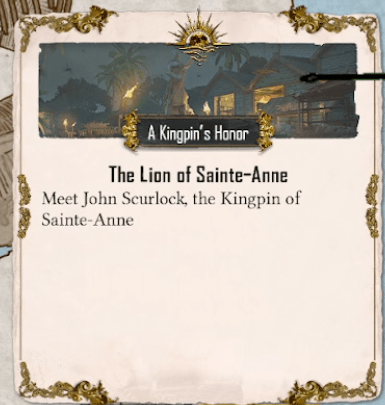

In other words, he’s a walking bag of mafioso tropes transplanted into the material reality of the 1690s. There are some scholars who have tried to compare mafia organizations with pirate conglomerates, but they end up emphasizing how little organizational similarity they have, other than being criminal enterprises.
So, I don’t get what they’re trying for, there, but since I was hammered over the head with the ideology of “I can play by my own rules here,” I don’t get the sense Scurlock will be our friend for very long….
The weird
In true Ubisoft fashion, there were also a bunch of absolutely bonkers material culture traditions that seem to just exist to undermine the things I liked. The funniest by far are the Tylosaurus teeth that one Malagasy trader was asking for.
As it turns out, Tylosaurus was a genus of mosasaurs.

As far as I can figure, Ubisoft wanted megalodon fights like Sea of Thieves has, but didn’t want a giant shark. So instead, they chose a marine predator from the Americas that has been extinct since the Cretaceous. Madagascar is known for having prehistoric animals survive in its waters, but this is ridiculous.
The firearms also illustrate our case. Culverins, apart from being obsolete by 1695, are known for being long, low-caliber guns frequently cast from bronze. The game sort of understands this – the culverin has lower damage but higher range than the demi-cannon, but visually it’s just… unrecognizable. Also, yeah, we’re using 100-year-old cannons! Let’s not forget that little tidbit!

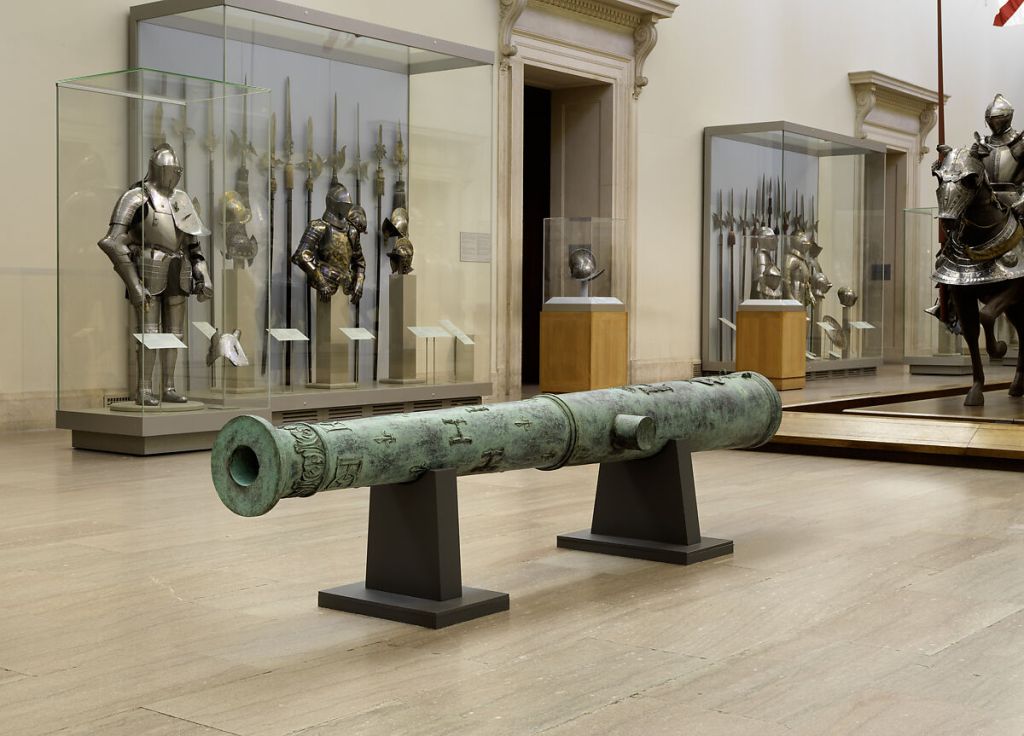
There are hundreds of these little decisions around in the world design, weapons, and ship armor of Skull and Bones, and for someone who was interested in the game for the setting, it saps all the excitement and joy from it. When everything is a dice roll to see if it’ll be great or baffling, it’s tough to keep gambling.
I rolled those dice with Assassin’s Creed Valhalla, and as a historian it proved to be an exhausting endeavor. Sure, I could try and turn my brain off and roam around with a couple friends, but… Sea of Thieves is so much better for that! And ultimately, that is my core issue with Skull and Bones. It simultaneously wants to be a serious historical simulation with big long diatribes about the stinginess of New York smuggling fences while also having silly emergent stories about how an 80 million year old marine reptile ruined a whole treasure fleet, and from what I played, I would guess that it will be less than the sum of its parts.

Ludohistory is made possible only through viewer support. If you enjoyed this post and want to support the channel, please do consider joining on Patreon.
 Ludohistory
Leave a comment