

Aka “The Weeb Arc”
by Adam Bierstedt
2024 is looking to be a big year here at Ludohistory. Over the course of the entire year, we’re going to be taking a look at an area of the world I know next to nothing about – the Japanese archipelago. Bringing the usual channel flair to it, we’re going to be primarily exploring this through games and gaming, though as I’ll explain more below, there’s a few reasons why we can’t do it exclusively through that medium. In this blog post, I’m going to go through what my plans are for the project, what games we will be playing, and the innovations on the Ludohistory formula that will take place to enable the project!
I’ll be honest, this project is partly self-indulgent – I’ve wanted to learn more about Japanese history for a long, long time, and the channel gives me an excuse to! But, that’s only half of the motivation! As a concept, Ludohistory thrives when I am able to move freely between media analysis, co-research and co-learning, and museum studies analysis. In order for that to happen to the rigor I want it to, we need a lot of diverse resources and perspectives accessible online! The perennial popularity of Japanese history to Anglo-American audiences should provide those needs, and will make Japanese history a pretty good match for the channel!
I think it’s going to be a really exciting project that stretches the boundaries of what I can do with the channel, and I hope you all are excited to tune in!
Japanese History Timeline
As we get into the details of the project, there are going to start being names and dates, and I don’t want to assume anyone knows off the top of their head what the “Yayoi period” actually means – I certainly didn’t! So, let’s take a brief look at the usual periodization of Japanese history!
- Jomon Period (ends c. 300 BC) – This period sees the first development of Japanese agrarian settlements. It’s got an utterly delightful material cultural, with probably the most famous thing being little humanoid figurines known as dogū (the design source for Shin Megami Tensei’s Arahabaki… sometimes).
- Yayoi Period (300 BC-250 AD) – The Yayoi sees the development of the first identifiable polities in the main islands of the Archipelago, especially in the southwestern plains of Honshu in Yamatai
- Yamato Period (250 – 710) – the Yamato clan comes to rule over most of the central island of Japan, and establishes the imperial dynasty that technically has ruled over the island since (big emphasis on “technically” there).
- Nara Period (710- 794) – our earliest written sources, the Kojiki and the Nihon Shogi, date to this period, though they tell of histories going back to the start of the Kofun. Buddhism first enters Japan due to elite adoption of Tang Dynasty culture from China.
- Heian Period (794-1192)– a new capital, Kyoto, is established here. The Heian period sees a flourishing of cultural output among the elite, including literary output like The Tale of Genji. Ends with a conflict known as the “Genpei War,” which later develops into a legend in its own right
- Kamakura period (1192-1333) – The Minamoto clan, the winners of the Genpei war, establish their own court system known as the first Shogunate (which claims to serve the imperial dynasty, but really does its own thing).
- Muromachi period (1338-1477ish) – a period of decentralized power under the Ashikaga Shogunate, the Muromachi sees the development of theatrical and artistic traditions that will be refined in the later Edo period.
- Sengoku Jidai – Depending on how you want to describe this, it could go anywhere from 1450-1650, though it traditionally ends in 1603. This is the big money period for drama and “samurai warfare”, featuring warring nobles, or daimyo, like Oda Nobunaga and Tokugawa Ieyasu.
- Edo Period (1603-1868) – also known as the “Tokugawa Shogunate.” Tokyo develops into a powerful city in this period, and the relative stability of the shogunate and its isolationist policies develop distinctive social and cultural spaces.
- Bakumatsu Period (1853-1868) – American Commodore Matthew Perry’s warships demanding American traders be allowed into Yokohama causes a revolt against the Tokugawa and an influx of new goods and ideas.
- Meiji Restoration (1868-1912) – The “restoration” of the Imperial family to the throne meets an urgent perception of Japan to adopt “Western” philosophy, technology, and culture. That includes colonialism – Hokkaido, Korea, and Taiwan are most prominently and brutally colonized by Japan.
- Taisho Period (1912-1926) – WW1 was overall good for Japan as the manufacturing industry booms. A democratic parliament experiments with liberalization, but backlash and violence throughout the 1920s results in the young democracy collapsing.
- Showa period (1926-1989) – weirdly, both the pre- and post-World War 2 periods are called the Showa, though they appear to be quite distinct socially and politically.
- Heisei Period (1989-2019) – Modernity, basically, characterized by Japanese exports in entertainment, technology, and animation.
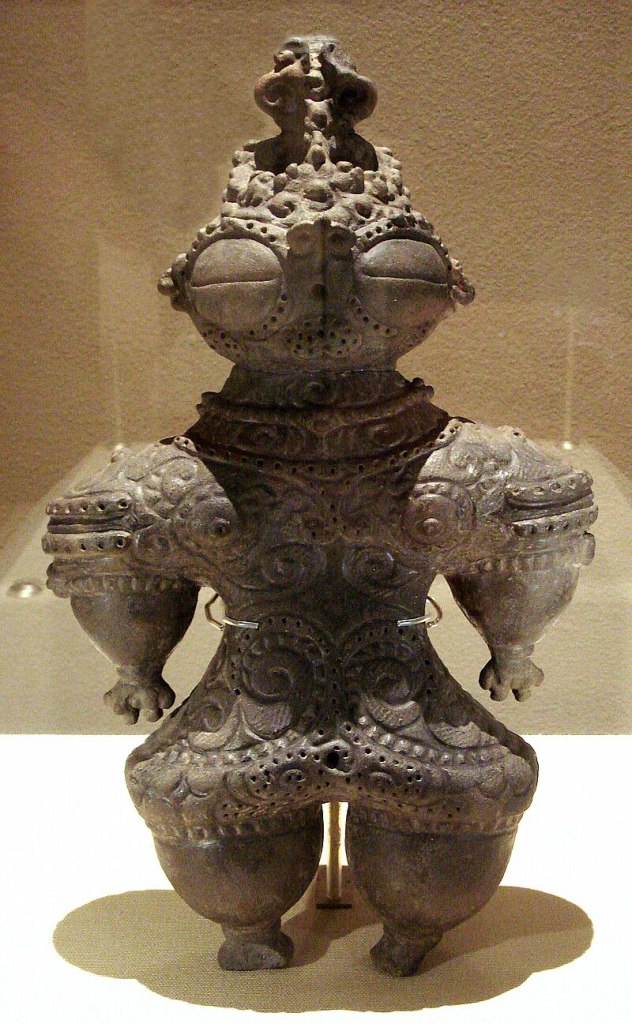

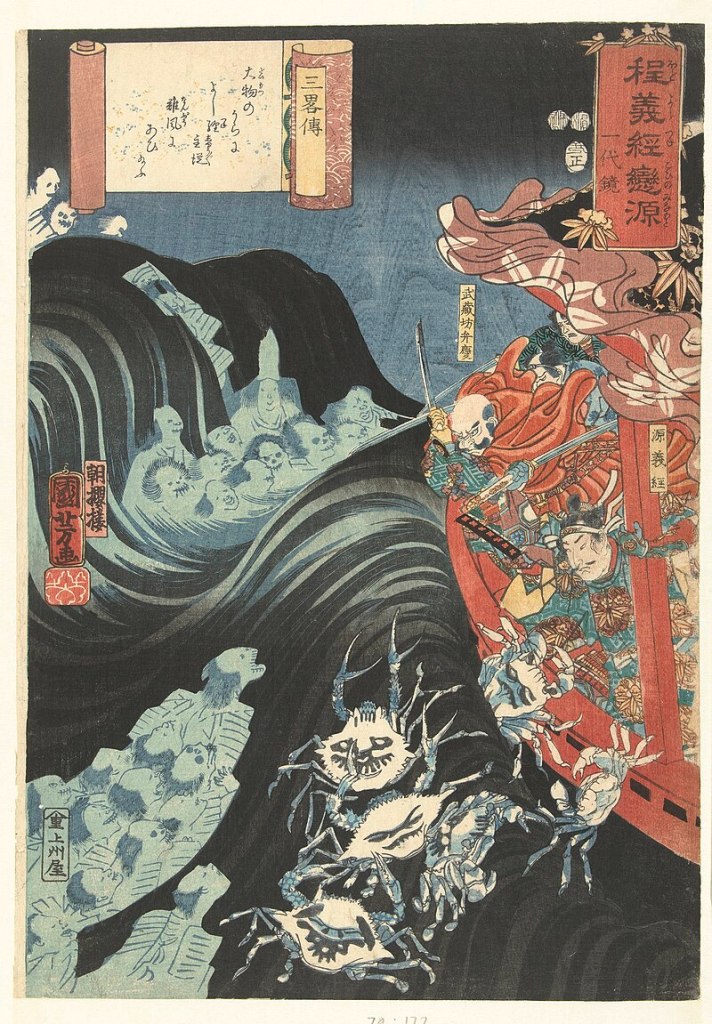
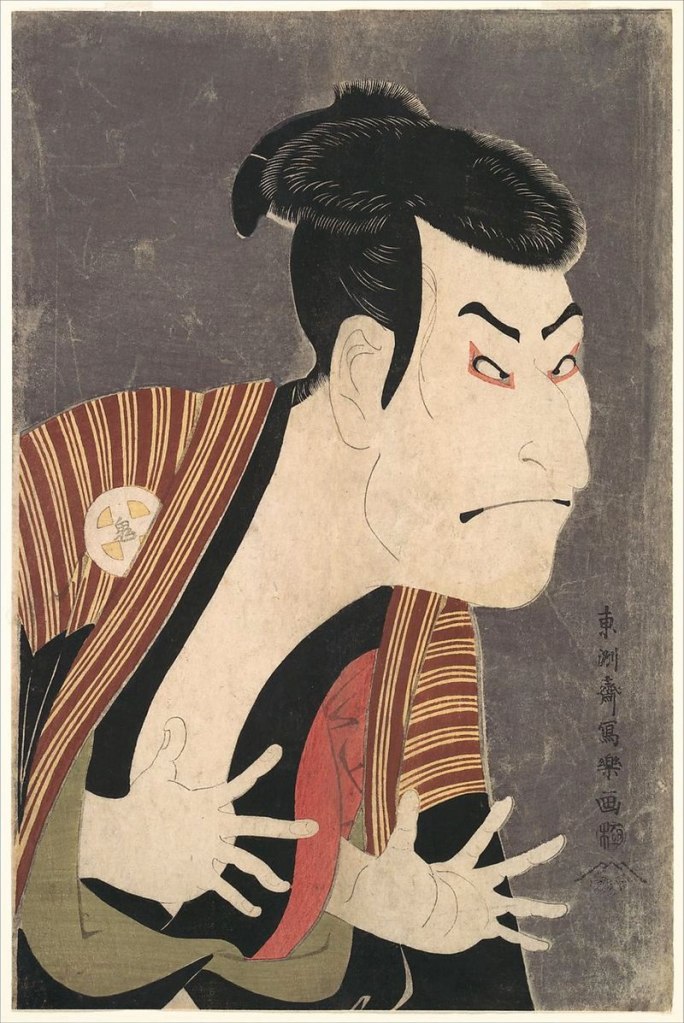
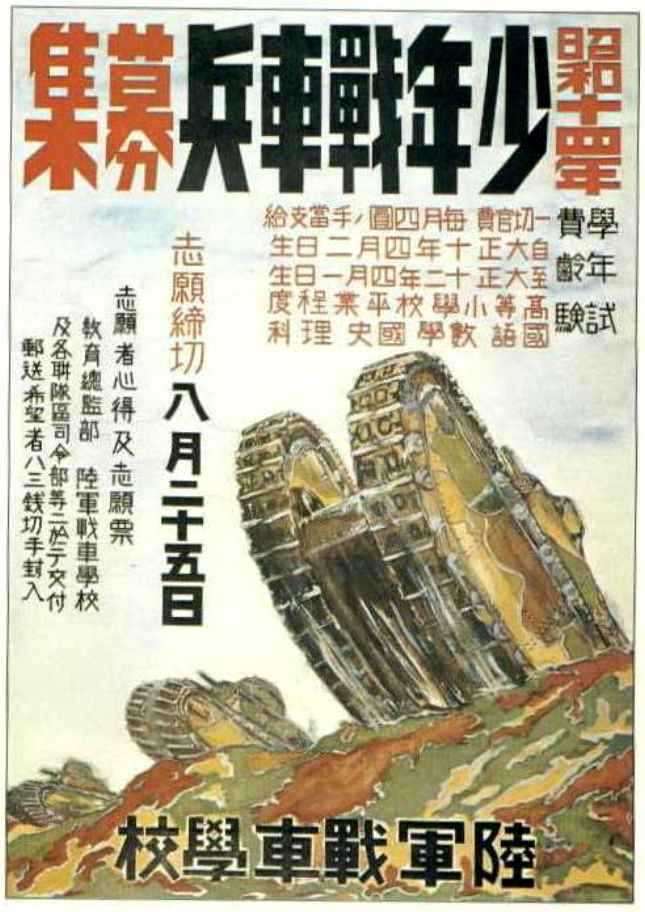
In this project, I’m hoping to get to the start of the Showa period – World War 2 is so much its own thing that it’ll have to be its own event. We do only have 12 months, though, so we’ll see how far we actually get. I have a very good reason to be uncertain, though – the media distribution within that timeline is wildly uneven!
Media and Japanese History
As it turns out, there are very few stories that get regularly told about Japanese history. The biggest, messiest, most heroically tragic figures get recycled over and over again, and the centuries in-between those figures (even if those centuries are full of plenty of crises of their own!) get elided. For Japan, there are two: the Genpei War and the Sengoku Jidai
- The Genpei war marks the end of the Heian period. It was fought between two military families, the Minamoto and Taira, over access to lucrative and influential imperial positions. The Minamoto clan won and established a “shogunate” in the town of Kamakura. The tragic warrior Minamoto no Yoshitsune and his vassal Benkei have been enshrined in hundreds of folk stories, dramas, and games since then.
- The Sengoku Jidai marks the most extreme breakdown of political authority in Japan. Monasteries and local officials developed into rival military factions, and a brutal succession crisis in the Shogunate destroyed the capital city of Kyoto. In the late 1500s, a series of three rules – Oda Nobunaga, Toyotomi Hideyoshi, and Tokugawa Ieyasu, successively reunify Japan and establish a new framework of social organization that usher in the Edo period (named after the Tokugawa capital city, which is now Tokyo).
This isn’t to say that there is no media that explores other time periods – many of Akira Kurosawa’s films are set in the Heian or Muromachi periods! But, the absolute dominance of the Sengoku Jidai and Genpei War have proven a big stumbling block for me as I try and figure out how we’re going to make this happen.
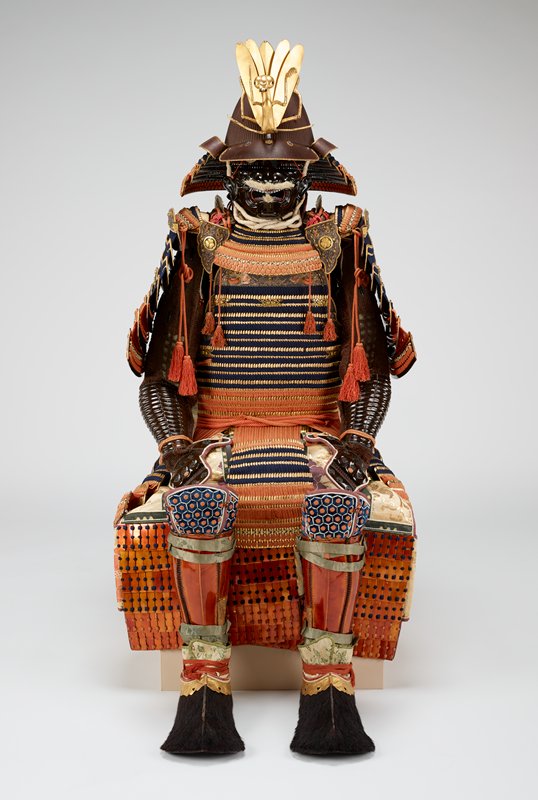
All that is to say – if there are museum exhibits, movies, or games that you know of that aren’t on my list, let me know so I can continue to refine this and get as much coverage as possible!
What’s happening on the stream
Okay, enough timelines. Let’s take a look at what games I’m currently likely to play! They’re roughly chronological, though some take place in multiple time periods which muddles things up excellently. I can’t promise I’ll play everything on the list, some things may have technical or scheduling reasons to get dropped, but we’ll do our best!
- Okami
- Age of Empires 1: Rise of the Yamato Campaign
- Genji: Dawn of the Samurai
- Age of Empires 2
- Ghost of Tsushima
- Sekiro
- Nioh 2
- Nioh
- Assassin’s Creed: Codename Red
- Total War: Shogun 2
- Shadow Tactics: Blades of the Shogun
- Europa Universalis IV: Japan History Lessons
- Ako: A Tale of Loyalty
- Shigatari
- Like a Dragon: Isshin
- Rise of the Ronin
- Pechka
- The Centennial Case: A Shijima Story
That’s a lot of games! And yet, there’s enormous gaps – most notably, the entire Heian is absent.
To solve this, we’re going to supplement this with a wide variety of other types of content! There are a few board games set in the Heian that I’m considering trying to pick up, but I’m still undecided on that.
For the most part, though, every single week we will be doing a variety of virtual museum tours, collaborative research, lectures, interviews with people who are more expert-y experts than I am, or exploring other resources to supplement the games! In particular, I want to highlight the resources produced by UT Austin’s JapanLAB – the resources there recently won an award from the American Historical Association and are great distillations of some really complex topics. We’re going to get a lot of value out of them as we progress through the year.
I don’t know the exact breakdown of what I’m going to do week-to-week yet, but I can promise that it won’t be the same thing two weeks in a row! Also, as always – if you or someone you know is one of those more expert-y experts, please reach out, I’d love to talk to you about your work!
What’s Happening Off-Stream
I mentioned Kurosawa’s movies earlier, and it is intuitively obvious that any look at “history and media” in Japan should probably take a look at some movies. I can’t stream them, because of that oh-so-important thing known as Copyright, so instead I’ll be primarily dealing with movies right here on the blog! For the most part, I’m anticipating these to be really informal observations, focusing on what is
Additionally, I want to also talk about some of the primary literature coming out of Japan in various time periods. That mostly means some of the famous stuff like The Tale of Genji or the Heike monogatari, but I also hope to explore some stuff around Nō and kabuki theater, printmaking, etc. in text as well as on-stream.
Unfortunately, I’m not currently envisioning a lot of YouTube-exclusive content as part of this project. Let’s face facts; the whole one video I released there in 2023 does not bode well for me being able to make consistent edited video content as part of this project. Rather than letting my ambitions run wild, I want to focus on these two places and create the most entertaining historical content I can there.
That’s all I’ve got right now as far as plans for my “weeb arc” – I’m excited by the opportunities! We can do food history, fashion history, social and economic history, environmental history, art history, and more through the time period, and it promises to offer a lot of opportunity to innovate on what I’ve established over the past few years.
The party is going to kick off on January 10th with the good wolf Amaterasu, so mark your calendars – I hope I will see you all over on Twitch then!

Ludohistory is made possible only through viewer support. If you enjoyed this post and want to support the channel, please do consider joining on Patreon.
 Ludohistory
Leave a comment